Brand identity
Logo vs brand identity: what should your project include?
A logo is the mark people recognise. A brand identity is the visual system around it: colour, typography, imagery, layout and guidance for using those elements together. Decide which you need by listing the places your brand must appear, rather than choosing a package by its name.
Start with the applications
A new café may need a sign, menu, takeaway packaging and social templates. A consultancy may need a website, presentation and proposal. Both need a recognisable identity, but their launch requirements differ. List the first applications, their formats and who will use the files. That list helps define a useful scope.
If your existing colours, typography and layouts already work, a focused logo update may be enough. If each touchpoint looks unrelated, changing the mark alone leaves the wider design decisions unresolved. Ask which parts of the system should be retained, improved or created.
What a visual identity can cover
A written scope should identify the logo versions, colour palette, typography, image direction and application rules required for your brand. It should also name the actual deliverables: a set of social templates is different from designing every post; a packaging concept is different from artwork for a complete product range.
Guidelines make those decisions usable by other people. Useful guidance explains spacing, backgrounds, readable type, colour combinations and example layouts. Agree on file formats, font licensing responsibilities and which applications will be handed over before the project starts.
Daterra: an identity connected to place
Daterra is a food brand rooted in Khorfakkan and Emirati hospitality. Its identity combines a date-palm mark, coastal and mountain illustrations, warm colours and bilingual typography. Those elements carry into Rangina gift boxes, granola packaging and photography direction.
The design lesson is about relationships: the mark, illustration and packaging need to tell a coherent story together. A brief for a place-led brand should describe the setting and rituals that matter, and the products through which customers experience them.
Athar: a system that travels across gifting
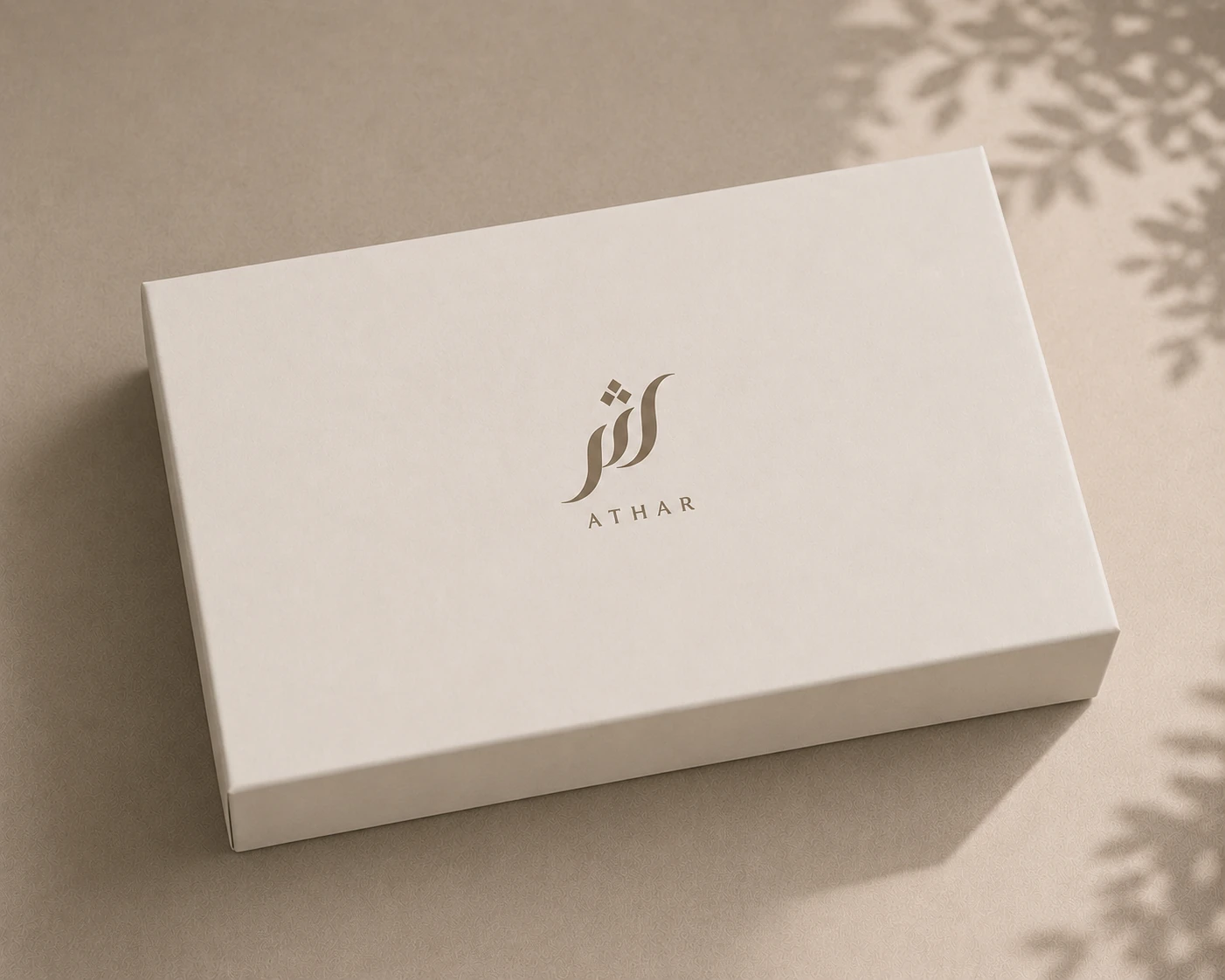
Athar pairs a contemporary Arabic calligraphic mark with an English wordmark. Walnut brown, warm ivory, botanical greens and champagne-gold accents connect the identity to wrapping, tags, packaging and stationery.
This demonstrates why the application list matters. A small gift tag and a larger wrapping pattern need different compositions while remaining recognisably related. Ask to see the identity on your real formats, including small uses, before approving the overall direction.
A short brand identity brief you can use
Copy these prompts into an email or document and answer them in plain language. Specific examples help more than a long list of adjectives.
- Business and audience: what do you offer, and who needs to recognise it?
- Project reason: launch, refresh or change in positioning?
- Existing assets: what must stay, and what can change?
- Launch applications: list formats, dimensions and priorities.
- Languages: which names and approved translations must appear?
- References: explain which details you like and why.
- Delivery: budget range, timing, approver and required files.
Practical answers
Does brand identity include a website?
Only when website work is included in the agreed scope. An identity can establish the visual direction for a website, while UI/UX design and development remain separate deliverables.
Do I need to replace my logo to improve consistency?
Not always. Typography, colour, image direction and layout rules can improve how an existing logo is used. Review the current materials before deciding what needs to change.