Packaging
How to brief a bilingual packaging range
A useful bilingual packaging brief defines the products, pack sizes, languages, approved copy and printer requirements before layouts begin. Plan the whole range together so each variant is easy to identify and Arabic and English have space to read clearly.
Build a product matrix first
Create one row for every product and pack size. Include its name, variant, weight or volume, languages, barcode reference and artwork status. Separate a change of flavour from a change of structure: a new pouch size may need a different layout even when the product name is unchanged.
The matrix also exposes missing inputs. Mark copy, dimensions or photography as pending rather than leaving the designer to guess. Identify the person responsible for approving each item and the person who signs off the complete range.
Treat both languages as design inputs
Provide the approved Arabic and English names and copy at the beginning. A translated line can occupy a different amount of space, and reading direction affects composition. Review the hierarchy in both languages: brand, product name, variant and supporting information should remain understandable.
Ask fluent readers to review the final layouts in context, not only a separate text document. Check line breaks, punctuation, numerals and the relationship between the two scripts on each panel. Translation, copy approval and layout approval are related tasks with separate responsibilities.
Decide what stays consistent across the range
In the Hatshepsut portfolio, a seven-SKU frozen food range uses Temple of Deir el-Bahari line art, a rising sun and Arabic calligraphy as shared identity elements. Forest green distinguishes vegetables while crimson distinguishes fruit. The range offers a concrete example of a common system with category variation.
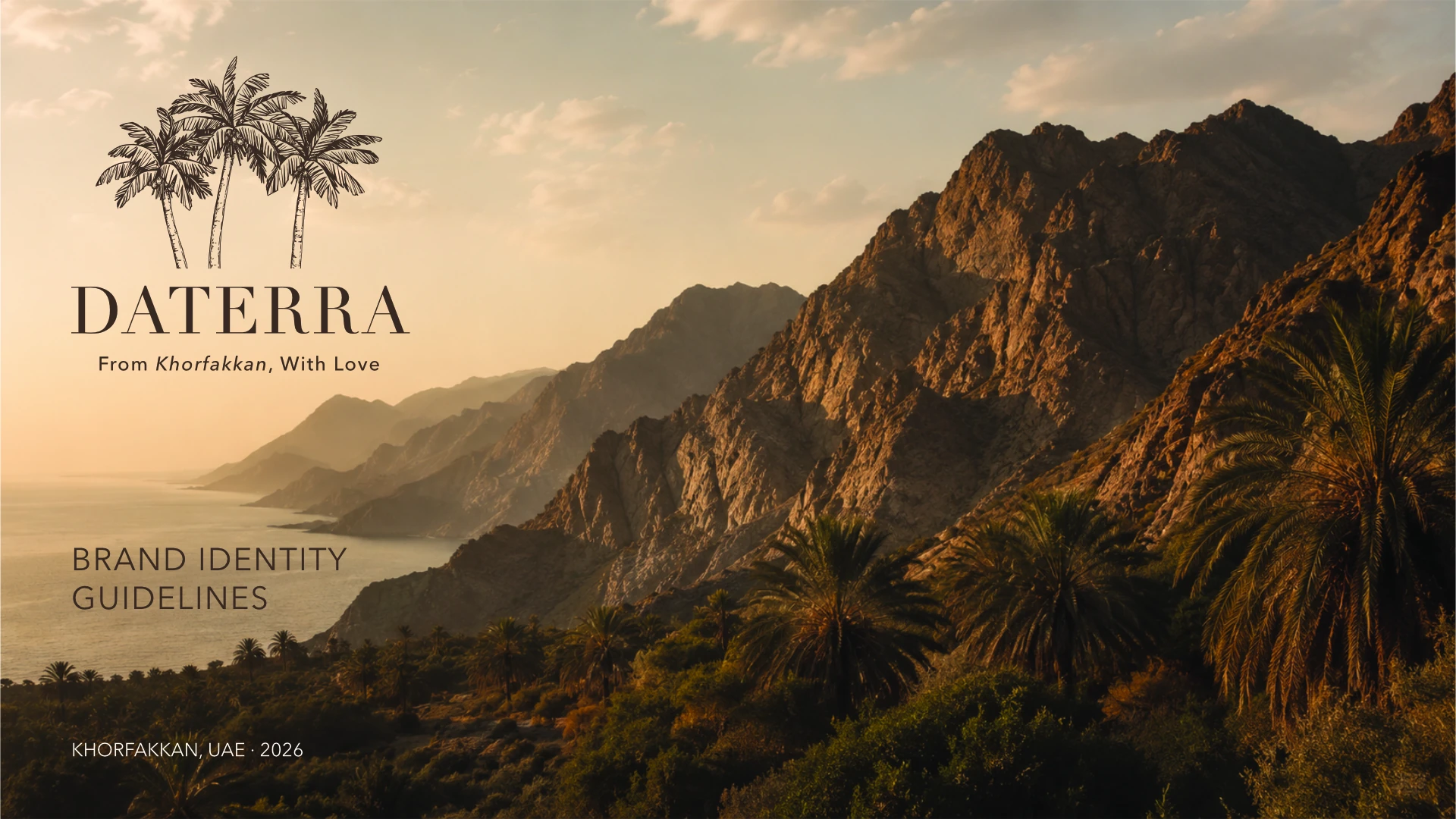
Daterra brings its date-palm mark and place-inspired illustrations into Rangina gift boxes and granola packs. The structures differ, but the underlying colour, type and visual language connect them. Decide which elements identify the brand and which identify the product.
Plan additional languages and panels
Lili’s export packaging includes French, Italian, Dutch and German for its target markets. A multilingual range needs a panel plan and approved content for every version. Adding a language late can change the balance of the entire pack.
Keep the product matrix tied to the artwork filenames and version history. Ask for a final review of each actual variant, rather than assuming a template has made every pack correct. Confirm any required market-specific content with the people responsible for product approval.
Confirm production inputs before final artwork
Request the printer’s current dieline, dimensions, bleed requirements, colour specifications and output instructions. Check which panels are visible, folded or sealed. A presentation mockup helps discuss the concept; it does not replace the production file or a physical proof.
Agree who supplies barcodes, nutrition data and other product information, and who checks them before printing. Have the appropriate product or regulatory specialist approve required label content for the intended market. Design approval alone does not establish compliance.
Packaging brief checklist
Use these prompts alongside your product matrix. Send the actual inputs, or mark their availability and expected approval date.
- Range: product names, variants, sizes and number of artwork versions.
- Markets and languages: approved copy and reviewers for each language.
- Structure: current dielines and printer contact or specifications.
- Brand assets: logos, fonts, guidelines and image permissions.
- Hierarchy: what shoppers should recognise first, second and third.
- Approval: copy owner, artwork approver and production sign-off.
- Timing: launch date, proofing window and budget range.
Practical answers
Can one packaging design cover every SKU?
A shared system can support a range, but each variant still needs its own approved content, layout check and production artwork. Changes in size, language or structure can require additional design work.
Should a mockup be sent directly to the printer?
Use a mockup to review appearance and presentation. Ask the printer for production requirements and supply the agreed artwork files for checking and proofing.